Jen Klenk

  • Home
  • About
  • Teaching
    • Teaching Philosophy
    • Reflection
  • India Study Abroad
  • Professional Development
  • Service
    • College Service
    • Community Service
  • Professional Activity
  • Research
  • Home
  • About
  • Teaching
    • Teaching Philosophy
    • Reflection
  • India Study Abroad
  • Professional Development
  • Service
    • College Service
    • Community Service
  • Professional Activity
  • Research

Teaching Philosophy

Experiential Learning

     My career in marketing and multimedia started in the fifth grade, at the age of ten years old. It was the 1980’s and school psychologists used students for social/educational experiments. My elementary school took the top ten students based on a series of psychological/academic metrics and removed the students away from the classroom for the entire fifth grade. Instead of attending school, we did all our coursework at home, and spent our time learning through practical application. For example: to learn aerodynamics, we traveled to an airport and boarded a plane; to learn the justice system, we attended court. The crux of our experience culminated in lobbying and passing a bill that placed a statue of Philo T. Farnsworth, the inventor of television, as Utah’s representation in Statuary Hall, Washington D.C.


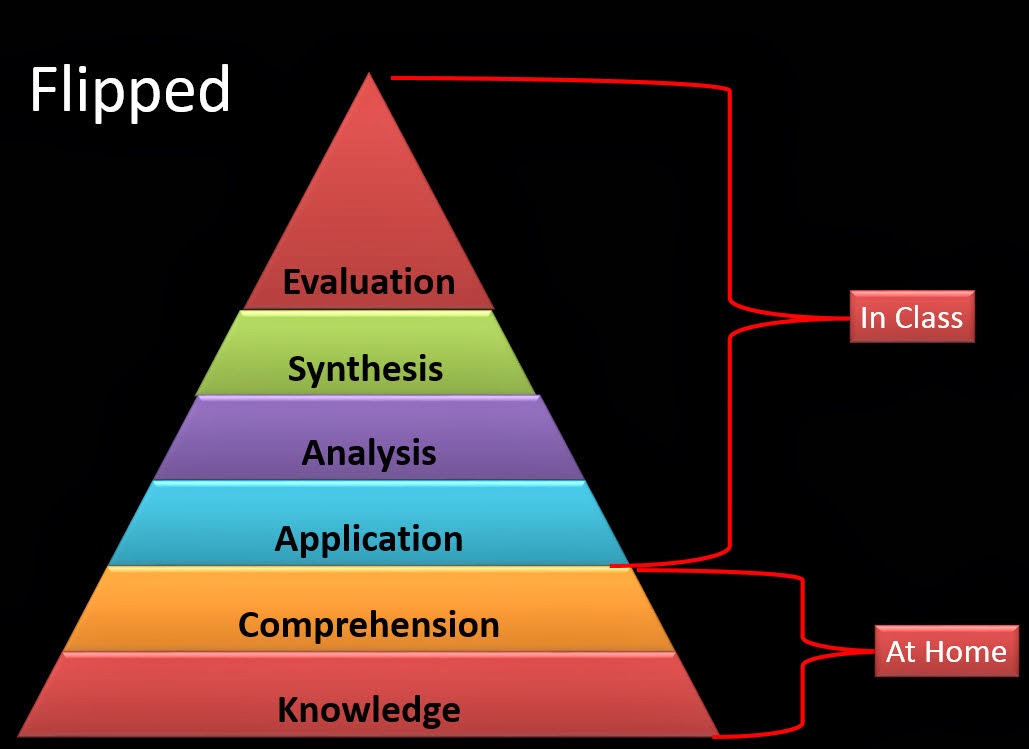
     Working with state Senators, my job was marketing. We had to create and set up events to raise funds for the project. I had to call senators and arrange dinner parties. We did media junkets and talked to the press. We sent out invites, created posters and brainstormed strategies to market our bill to lobbyists. It was the best experience of my grammar education, which is probably why I love experimenting with the flipped classroom model. Our external classroom not only succeeded in cementing Philo’s place in Statuary Hall, but it provided practical application skills and created a deep passion for multimedia.

     At 18, I attended Salt Lake Community College on a Presidential Leadership Scholarship, followed by a cheer squad tuition waiver.

     I relished my time at Salt Lake Community College. SLCC has so many resources geared toward the success of the student, I found it to be the perfect training ground for experimentation and innovation. My best college memories are at SLCC. I met new, diverse people every day and formed friendships that have lasted a lifetime. The diversity at SLCC expanded my mind and encouraged me to strive to become a better person. At SLCC, I found love, learned compassion and became immersed in critical thought. 

     My time at SLCC as a student had great influence on my teaching philosophy and style, as I love innovation and will incorporate the latest technology the students and I have access to:  Cell phones become essential learning tools; apps are incorporated into homework assignments;  social media trends are classroom discussion; quizzes are in the form of video game competition. In my class, students work together in groups as the classrooms morphs into their lab for innovation and experimentation.

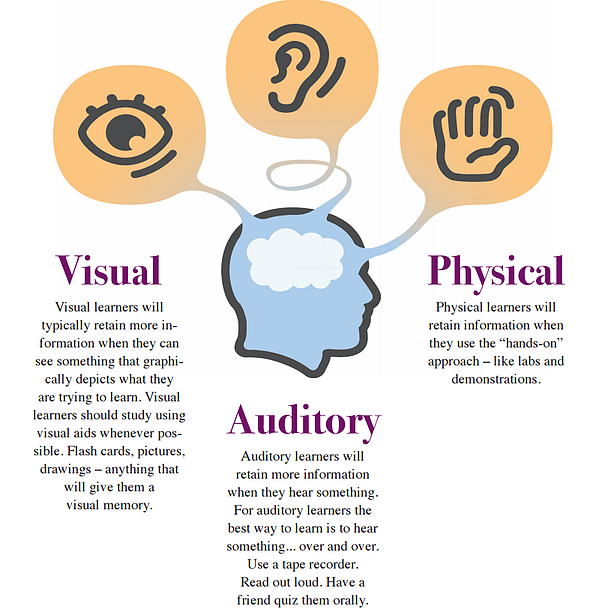
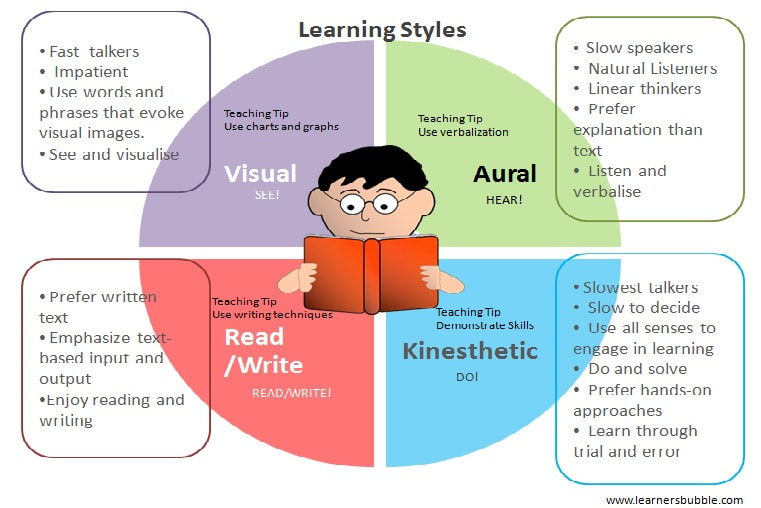
     In every class, I strive to incorporate auditory, visual and kinetic learning. I am a believer in hands-on learning, practical application, technology and peer discussion. I also encourage competition and revision, as both are essential to stay employed in the Marketing industry.  

     
Self-Assessment

What I do well:
  • Incorporate Technology
  • Incorporate Practical Application
  • Care About Student Success
  • Encourage Doing it Well (Revision)
  • Group Projects
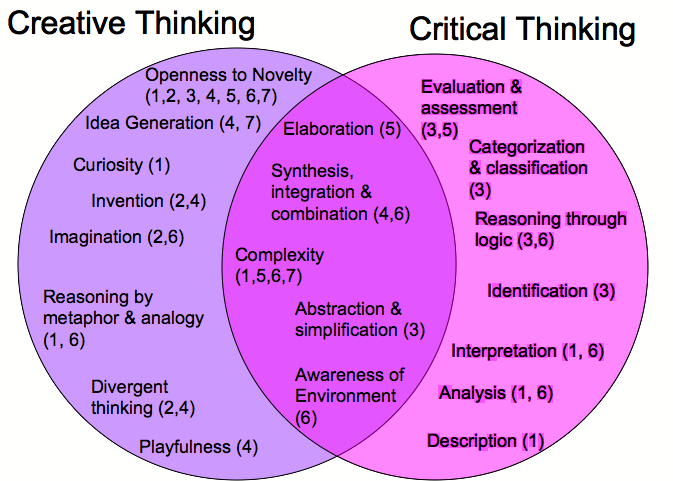
  • Critical Thought
  • Debate
What I can Improve:
  • Course Organization
  • Building Better bridges
  • Making Tighter Connections
  • Increase Feedback/Better Feedback
  • Restructure Grading Process
  • Enhance Online Discussion Process
Picture
Picture
Picture
Picture
Picture
Picture
Picture
    
8 Reasons why Experiential Learning is the Future of Learning 
​
 
​
by Mr Rajiv Jayaraman, Founder and CEO, KNOLSKAPE
​elearningindustry.com/8-reasons-experiential-learning-future-learning

​Experiential Learning Is The Future Of Learning

More than a hundred years ago, Hermann Ebbinghaus formulated the learning curve, which describes the relationship between memory and time. In a nutshell, it says that, during a lecture, if your absorption rate is at 100 percent on day one, there is a 50-80 percent loss of learning from the second day onward, which is reduced to a retention rate of just 2-3 percent at the end of thirty days.
This theory is even more relevant in today's world where attention spans have come down and learning sometimes is reduced to 140 characters!
How then can 'Experiential Learning' help overcome this situation?
We believe there are eight reasons why experiential learning is the future of learning.
  1. Accelerates Learning
    Repetitive Learning or learning by rote has long been replaced by 'Learning by Doing.' Experiential Learning methodology uses critical thinking, problem solving and decision making to deliver a training module. This has become an established method to accelerate learning.
  2. Provides a Safe Learning Environment
    Simulations use real life scenarios that depict several challenges, which a participant will eventually face after the course completion. It is only natural that mistakes happen during the course of learning, and using simulations is  like taking kids to a playground, and getting them to have fun, try new things and learn, in a safe controlled environment.
  3. Bridges the Gap Between Theory and Practice
    By moving beyond theory to the realm of "learning by doing,' the trainee gets a first hand experience of practicing what has been taught.  This plays a crucial role in retaining concepts and ideas.
  4. Produces Demonstrable Mindset Changes
    There are very few learning methods that can have a dramatic impact on the participant's mindset. Experiential Learning is one of them. Management guru Henry Mintzberg pointed out long ago that, "Leadership, like swimming, cannot be learned by reading about it".
  5. Increases Engagement Levels
    The high focus on collaboration and learning from each other benefits the participant as it increases engagement. On the other hand, since the participant is immediately involved in the problem solving activity or event, the level of ownership of the outcome is high.
  6. Delivers Exceptional Return on Investment (RoI)
    Experiential learning is personal and effective in nature, influencing both feelings and emotions as well as enhancing knowledge and skills. It goes beyond classroom learning and ensures that there is high level of retention, thereby delivering exceptional RoI over a traditional learning program.
  7. Provides Accurate Assessment Results
    Assessing the effectiveness of the training program in terms of the benefits to the trainees and the company is a crucial element of any learning program. Most assessments are data driven and traditional tools use tests to measure effectiveness. When it comes to experiential learning programs, it is extremely difficult to gather data, which can be used for assessments. This is where analytics come in. When combined with simulations and gamification, experiential training products become a powerhouse of data, which can be used to deliver assessments results accurately across cognitive learning, skills affect and objective results.  The analytics engines in these simulations record, analyze and provide a detailed report on the participants’ interaction throughout the simulation.
  8. Enables Personalized Learning
    In order to enable personalized learning, every program needs to enable a journey through the following phases: Assessment, teaching and learning strategy, and curriculum choice. Experiential learning methodology is highly effective in meeting these requirements to enable personalized learning. It is a radical departure from traditional learning methods and takes the learning beyond the classroom. The participants set their own learning pace. By combining technology and simulations with experiential learning, companies are making this concept available anytime and anywhere, across multiple devices.  This has introduced the concepts of flipped classroom, where the learning goes to the students and not the other way.

LEARNTech Asia Conference 2014
Mr Rajiv Jayaraman is one of the speakers at LEARNTech Asia 2014. LEARNTech Asia 2014 will be held in Singapore at the Marina Bay Sands (13-14 November 2014). The topic he will be speaking on is “Designing Immersive Games for Experiential Learning”. For more information on the conference, please visit http://learntechconf.com/.
Proudly powered by Weebly